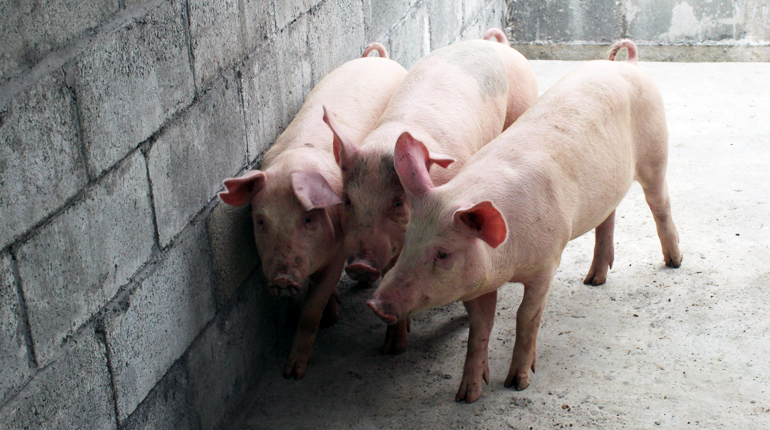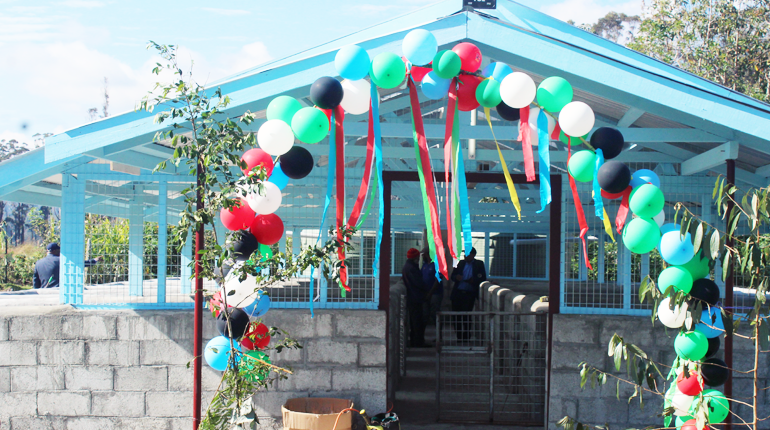
In an effort to breed disease free pigs, the National Agricultural Research Centre’s (NARI) Higher Altitude Highlands Research Centre in Tambul, Western Highlands Province, has officially commissioned a Sow Breeding Shed and a Mini Feed Mill Facility.
The aim is to improve pig breeds and supply local farmers.
In commissioning the specialised 14 Unit Sow Breeding Shed, Director General of NARI, Dr. Nelson Simbiken explained that the project will support farmers to improve pig production through sustainable and environmentally friendly farming practices.
“It will focus on preventing and controlling African Swine Fever (ASF), a serious disease that affects pigs, while training farmers in proper pig care, feeding, breeding, housing and general management.”
Acting Chairman of the NARI Council, Mr. Pius Piskaut said the pig breeding facility is the next chapter for Tambul in terms of research and development.
He congratulated the Tambul Research Centre and the surrounding community for a milestone piggery project that will benefit local farmers in the area and throughout the Highlands Region as a whole.
An elated Tambul Research Team Leader, Mr. Maima Sine said, local farmers in Tambul lost many of their pigs to ASF and “this breeding project will assist them greatly.”
He said the first stock of pig weaners will be distributed to four leading pig farmers in Western Highlands Province.
Maima acknowledges the PACD Project Manager, Mr Potaisa Hombunaka and his Project Management Unit team for the funding and technical support provided during the project implementation. He extended his gratitude to the NARI PACD project and construction team for the job well done.
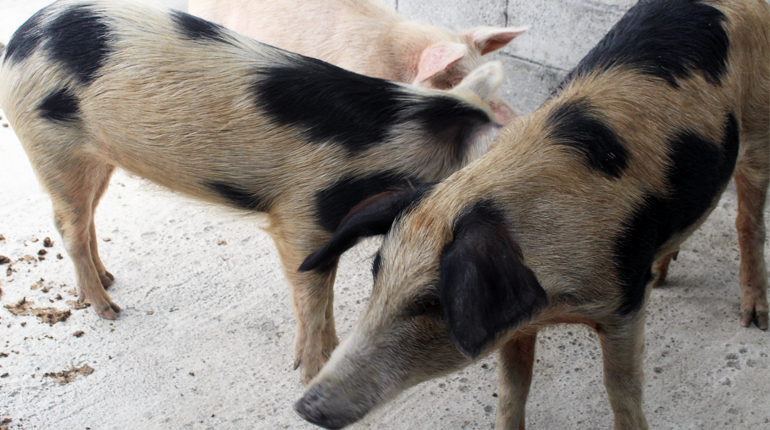
The infrastructure development will support and produce a disease-free foundation pig breeding stock of exotic and local breeds for distribution in the Highlands region. The project will also support the development of improved pig breeds with better disease resistance, promote the production of different pig breeds to meet formal and informal marketdemand, and introduce better ways to handle, process and maintain the quality of pig products.
These activities aim to help farmers increase production, reduce losses, protect the environment, and improve their income and livelihoods.
This will contribute to addressing the country’s pig production value chain challenges in terms of quality breeding stock availability in the Highlands.
The Breeding Shed was built at a cost of K280,000.00 from the Papua New Guinea Commercialisation and Diversification (PACD) Project through the Department of Agriculture and Livestock (DAL), under the Small Livestock Sector to facilitatethe development of competitive and diversified value chains in targeted provinces of PNG through the funding support of the World Bank.
PACD was established with an aim to shift the country’s farming sector from basic subsistence to commercial, market driven and export focused production.
Tambul is now the model research centre for pig breeding and the success of it will be replicated in other NARI centres throughout the country.
A Mini Feed Mill to complement the Pig Breeding Project was also commissioned and officially opened by NARI Council Member Professor Tom Okpul and Mr. Fred Rocky a Senior Auditor from the Auditor General’s Office.
The Mini Feed Mill is an important part of the Pig Breeding facility. Its main purpose is to formulate pig feed using local feed resources such as sweet potato, cassava, corn, beans and local vegetables, as well as commercially supplied products such as Pig Concentrate (Macro and Micro Ingredients), mill run, fish meal and other by-products to formulate a simple, complete, balanced diet for pigs.
NARI is promoting local feed ingredients which are readily available and economical so that farmers can spend less and gain more.