
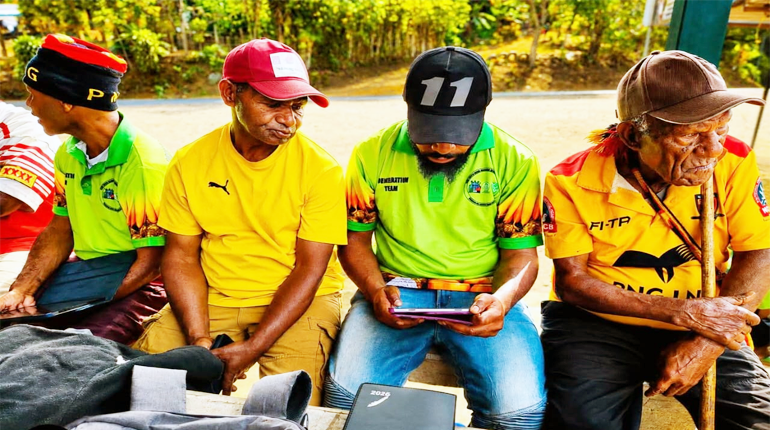
A socio-economy research is being undertaken by the National Agriculture Research Institute and the International Food Policy Research Institute (IFPRI) to identify the challenges and opportunities in a Fresh Produce Value Chain.
Fresh produce, or garden-grown fruits and vegetables, has been the basis of many informal sectors in Papua New Guinea.
To achieve the National Agriculture Sector Plan’s goal of transforming subsistence farming into commercial farming, it is imperative to evaluate and understand the socio-economic mechanisms that affect the Fresh Produce value chain.
A value chain includes all the necessary activities from production or farming to processing, transportation, product sales, and consumption at different stages of a product or service.
The project started early this year with initial groundwork and the training of 50 enumerators in July.
“For this survey, we want to identify the inefficiencies and opportunities in the Fresh Produce Value Chain,” said Deputy Director of the National Agriculture Research Institute, Dr Peter Gendua, who spoke to the enumerators before sending them off.
“Findings from the Provinces will be analysed to develop research and policy papers to inform the stakeholders, sector agencies and government to address the necessary constrains and opportunities to strengthen both domestic supply and demand of the fresh produce sector as well as options for export promotion,” he said.
The Fresh Produce survey is carried out in key production areas of Western Highlands, Jiwaka, Eastern Highlands, Simbu and Morobe Provinces.
Enumerators will hear from commercial fresh produce farmers, rural aggregators/lead farmers, urban wholesalers and retailers.

The survey is lead by Dr Emily Schmidt, a Senior Research Fellow in the Development Strategies and Governance Unit at the International Food Policy Research Institute (IFPRI), and Mr Anthon Goiye, a renowned Socio-Economist engaged by NARI.
This research aims to enhance evidence-based policy development and capacity within the PNG Agriculture sector by conducting targeted research and capacity-building initiatives in three key areas of;
- Enhancing Domestic and Export Value Chains
- Women’s Economic Empowerment in the Agriculture Sector and
- Climate Resilience, Climate Adaption and Mitigation
NARI’s Director General Dr Nelson Simbiken acknowledged IFPRI for partnering with NARI in this significant project that will provide a clear pathway in addressing challenges faced by each player in the Fresh Produce Value Chain.