
The National Agricultural Research Institute, with support from the Department of Agriculture and Livestock (DAL), is charting a new path with a review of its legislation, the NARI Act 1996 and a proposed name change.
The direction taken is to embrace and implement agricultural research innovation and development in agrifood systems for food and nutritional security.
The act review is set to adopt the recently launched National Agriculture Research Systems Framework, which provides for an integration of research innovations in development, at all levels of agricultural research, delivering the National Agriculture Sector Plan 2024-2033, the development and economic outcomes.
Meanwhile the consideration for a name change to the PNG National Agricultural Research Development Institute (PNGARDI) has been flagged by the Secretary of Department of Agriculture and Livestock, Dr. Sergie Bang, including Dr. Raghunath Ghodake former founding Director General of NARI.
Secretary Bang said that after 30 years of operations and the current stage of development, NARI must expand its mandate beyond just research.
“We feel now that PNG has come to a state of development and NARI has been in operation for 30 years, that this development aspect needs to be part of the institute.
“It will improve the value of research and how that information is utilised. It will enable PNGARDI to be resourced and expanded, thus becoming more relevant throughout the country by working more closely with all levels of agriculture extension and other stakeholders,” Dr Bang explained.
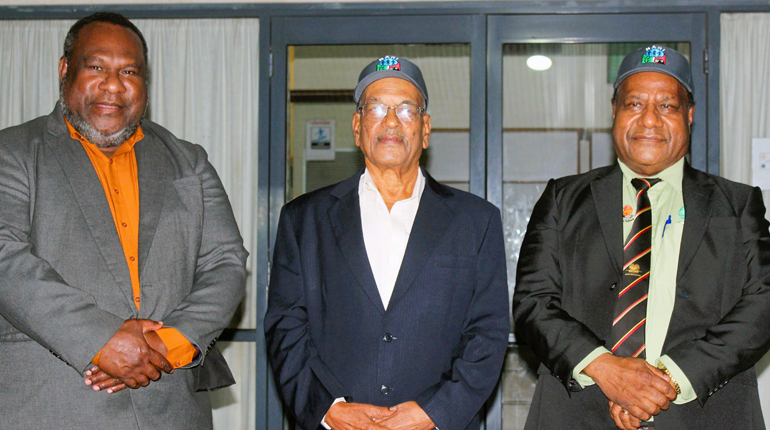
Dr Bang spoke at an official dinner hosted by NARI for Dr Ragunath Ghodake and his wife on the 19th of October in Lae.
The concept of PNGARDI is not new. Pioneers of NARI, including Dr Ghodake opted to leave out the Development aspect so it can focus solely on research.
However, with recent development challenges in agriculture, it is only fitting to rename NARI to PNGARDI to ensure its research reaches many people along a value chain.
After 12 years, Dr. Ghodake was pleased to see many more changes and development within the institution, including the engagement of many young researchers.
Dr. Ghodake also believes NARI can do more.
“My major worry is that we don’t have enough manpower; both scientists and technical staff, including others. I think we must change the name because it is appropriate to focus work going from research up to development with the results shared with Papua New Guinea.”
Dr. Ghodake started work with DAL in 1985 at Kuk Research Station as a resource economist.
He was first appointed as NARI’s Deputy Director General in 1997, then appointed as the Director General in 2002. A position he held until 2013.
The Department of Agriculture and Livestock will facilitate the process of the NARI Act Review and the subsequent name change through a policy paper.