
BUBIA, MOROBE PROVINCE: The National Agriculture Research Institute has initiated external stakeholder consultation to review the NARI Act 1996.
After thirty years, the review is critical to align the organisation with emerging challenges and opportunities.
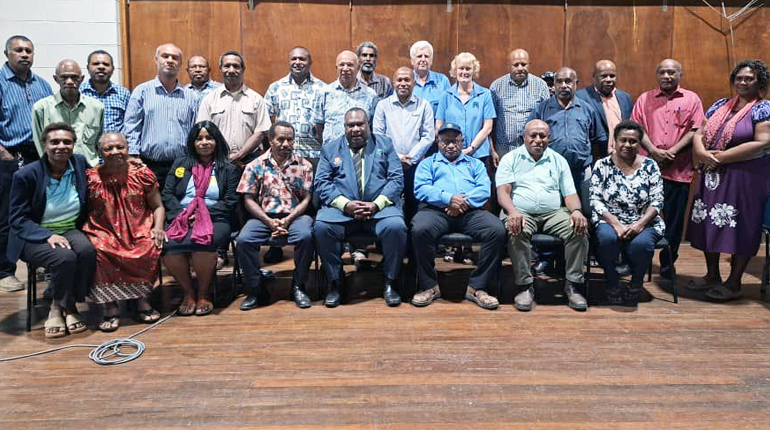
Stakeholders in agriculture and agricultural research in the Momase and Highlands region gathered at NARI’s Allan Quatermain Hall last Thursday (09/04/26) to provide feedback on proposed policies necessary to amend the act.
NARI was enacted by an act of parliament in 1996.
During the colonial administration and into the early years after Independence, the bulk of agricultural research was resourced and coordinated by DAL until the 1980s when major reforms took place with the formation of commodity-based research and development institutions.
NARI was established to address the growing need for transformation of semi-subsistence agriculture, increase productivity of food production to supply increasing quantities and a wider range of food to domestic markets.
The National Agriculture Sector Plan 2024 – 2033 provides clear direction for transformation of the smallholder/subsistence agriculture sectors towards a modernised, innovative, sustainable and commercially-oriented agriculture.
NARI given its mandate and physical establishment is strategically placed to take up a leading role as an apex body for policy and coordination of agricultural research in the country.
While providing a brief history of NARI, Deputy Director General Dr Peter Gendua stressed that without a review and reform of the NARI Act, the institute risks losing its relevance and capacity while a strengthen NARI could become the central driver of agricultural innovation and transformation in Papua New Guinea.
Four policy statements discussed were;
- NARI Act shall be renamed as the National Agriculture Innovation System Act to reposition and strengthen NARI as a premier institution of the PNG Agriculture Innovation System
- National Agriculture Innovation System shall promote and empower institutional networking, active collaboration and engagement of key stakeholders, farmers and market value-chain agents and enterprises
- The natural resources base of soil, water, and the environment shall be managed for responsible and sustainable use and to conserve and protect for the benefit of future generations
- A versatile and sustainable funding system shall be developed to effectively harness resources from domestic, external, public and private sources.
Reinforcing the management’s commitment in undertaking the review, NARI’s Director General Dr Nelson Simbiken alluded that NARI is the National Engine linking agricultural science to market opportunities for every farmer and community.
“The stakeholder forums are to collect appropriate views to develop an appropriate legislation framework critical for improvement in all production factors and the future of NARI.”
The Southern and Niugini Islands consultation forum is planned for this week in Port Moresby.