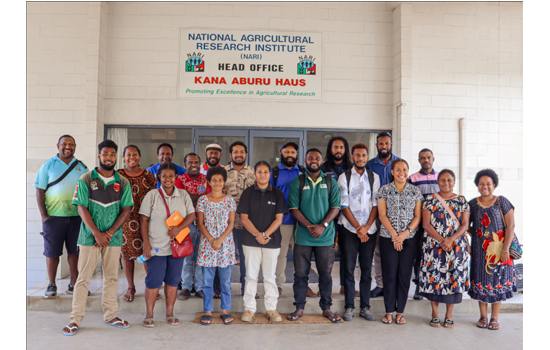
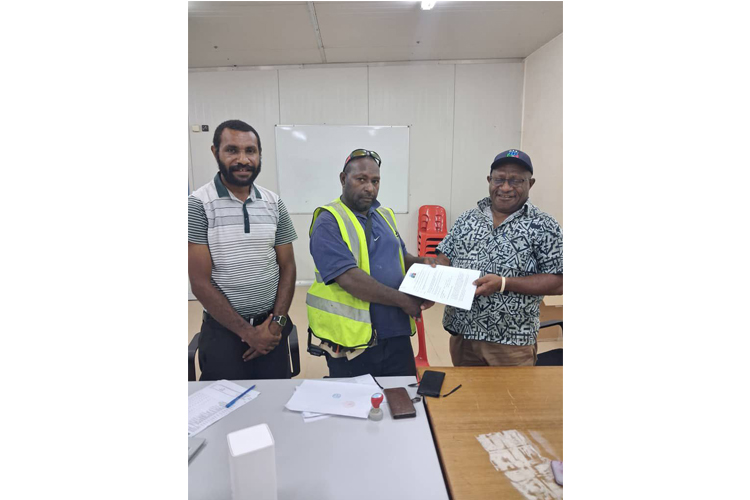
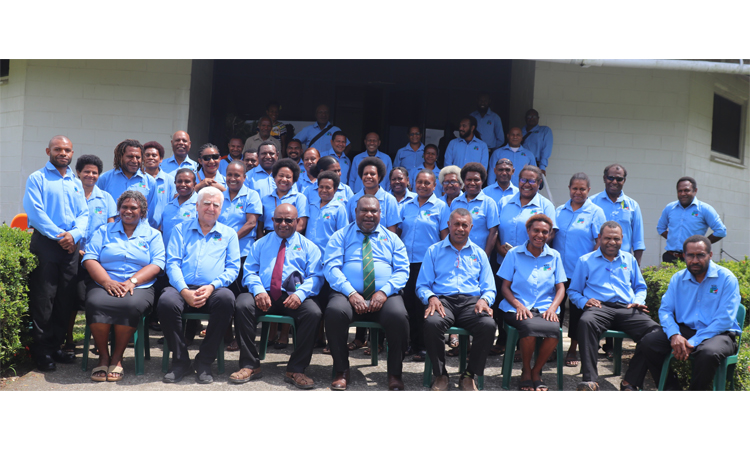
The National Agriculture Research Institute has signed a Memorandum of Understanding
with the Conservation and Environment Protection Authority (CEPA) to initiate formalities
under the United Nations Environment Programme’s Global Environment Facility (GEF) 7
Project.
The project titled “Integrated Land Management, Restoration of Degraded Landscapes and
National Capital Assessment in the Mountains of Papua New Guinea” aims to address Land
Degradation Neutrality (LDN) whilst strengthening rural livelihoods and conserve
biodiversity.
Land Degradation Neutrality refers to a state where the degradation of land is balanced by
restoration efforts, ensuring no loss of healthy and productive land. This concept was
introduced by the United Nations Convention to Combat Desertification (UNCCD) and is
integral to the 2030 Agenda for Sustainable Development, particularly under SDG 15.3.
This project is focused in the Highlands of Papua New Guinea, particularly the Hela Province
and Southern Highlands Provinces, where studies show a lack of integrated landscape
management which has seen an unabated loss of biodiversity.
Factors contributing to the lack of land management includes, weak governance, continued
land use conflicts, limited understanding of the true costs incurred by land degradation and
biodiversity loss and the limited knowledge and capacities on sustainable land and forest
management and utilization.
Under this partnership, NARI will work alongside the implementing partners and provide its
research expertise and advice, including community engagements and strategic solutions.
Director General of NARI, Dr Nelson Simbiken stressed the importance of government
agencies collaborating to build landowner land management capacities for the purpose of
practicing conservation agriculture and not destructive agricultural practices.
“Our input in there is to make sure that the landowners continue to benefit from their land
through agriculture, but in a more sustainable way.”